
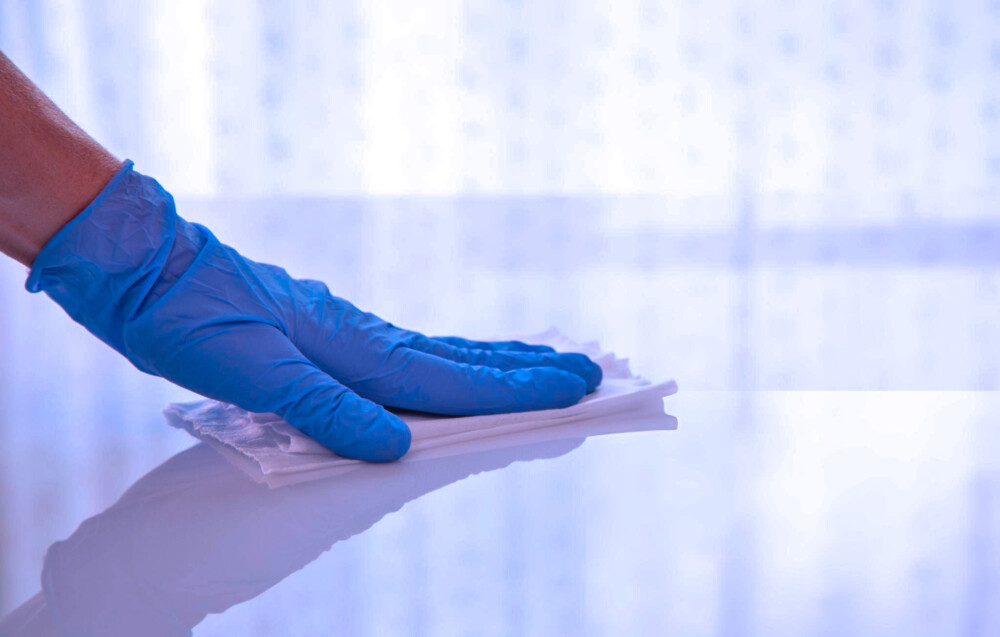
The EN 16615:2015 standard is one of the most relevant European methods for assessing the efficacy of chemical disinfectants and antiseptics used in the medical area, particularly those applied through impregnated wipes. Unlike traditional suspension tests, this method recreates a realistic scenario: the mechanical action of wiping on non-porous surfaces, closely simulating how disinfectant wipes are used in hospitals, clinics, laboratories, and healthcare environments.
The test is widely known as the 4-field test, as it evaluates both the microbiological efficacy of the disinfectant and the mechanical transfer of microorganisms across adjacent surface fields during the wiping process.
This dual perspective allows EN 16615 to demonstrate not only whether a product is effective, but also whether its application method using wipes guarantees proper, controlled disinfection without spreading contamination.
Scope Of EN 16615
EN 16615 is part of the European family of standards used to evaluate disinfectants intended for the medical area, under the framework of EN 14885, which organizes the hierarchy of microbiological standards applicable across the European Union.
This standard applies specifically to:
- Wipes impregnated with antiseptics or disinfectants
- Products intended for non-porous surfaces
- Use in hospitals, clinics, medical offices, laboratories, and patient-care areas
Its objective is to simulate real-world use conditions, where efficacy depends not only on the chemical formulation but also on the wiping technique, initial microbial load, and potential transfer of contamination between surface areas.
Microorganisms Used In EN 16615
The microorganisms required in the method represent clinically relevant pathogens associated with contaminated surfaces in healthcare settings. According to the UNE-EN documentation provided, the standard includes the following reference strains:
- Staphylococcus aureus ATCC 6538
- Pseudomonas aeruginosa ATCC 15442
- Enterococcus hirae ATCC 10541
- Candida albicans ATCC 10231 (for yeasticidal activity)
These organisms cover the microbial spectrum most relevant to surface decontamination:
| Microorganism | Relevance | |
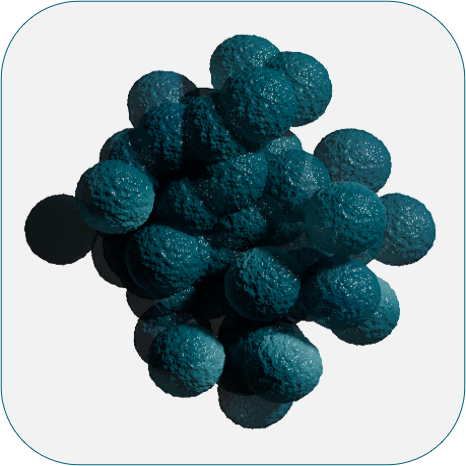 |
S. aureus | High environmental persistence; frequent nosocomial pathogen |
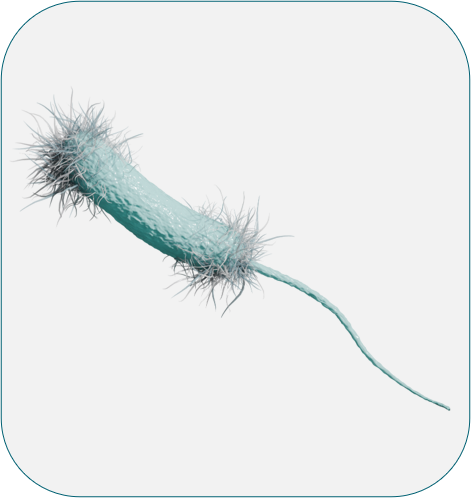 |
P. aeruginosa | Highly resistant Gram-negative species; thrives in humid medical equipment |
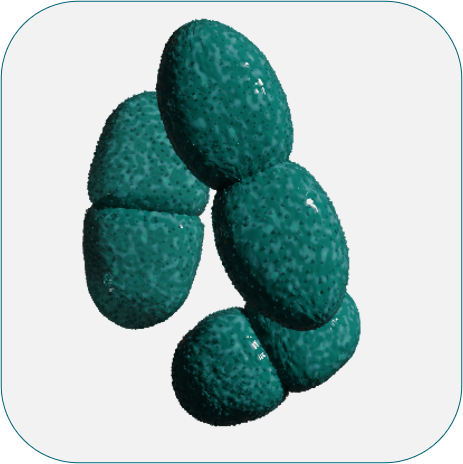 |
E. hirae | Representative of enterococci in medical environments |
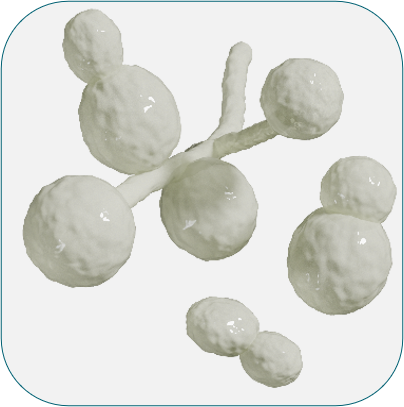 |
C. albicans | Common yeast present on moist healthcare surfaces |
This selection ensures that disinfectant wipes are tested under conditions that reflect real-life contamination challenges.
EN 16615: Principle And 4-Field Test Method
The hallmark of EN 16615 is its dynamic and realistic approach, measuring two aspects simultaneously:
- Logarithmic reduction of microbial load on the initial field (Field 1)
- Prevention of microbial transfer to Fields 2, 3, and 4 during wiping
General steps of the method:
- Inoculation of Field 1 with a defined microbial suspension
- Controlled drying of the surface
- Application of the disinfectant wipe, wiping across Fields 1 → 4 following standardized movements
- Neutralization and recovery of surviving microorganisms
- Independent microbiological counting for each field
Efficacy criteria:
- ≥ 5 log10 reduction on Field 1 for bactericidal activity
- ≥ 4 log10 reduction for yeasticidal activity
- Minimal microbial transfer to Fields 2–4
The test outcome is influenced both by the disinfectant itself and by the wipe material, its level of impregnation, and the standardized movement technique.
Test Conditions And Critical Parameters
EN 16615 defines the conditions with precision, including:
- Contact time (commonly 1 minute, depending on product instructions)
- Test temperature (20 °C ± 1 °C)
- Clean and dirty conditions, simulated using interfering substances such as:
- BSA (bovine serum albumin)
- Tryptone or blood for high-load conditions
- Standardized non-porous surfaces, typically PVC
The method also requires validation of the neutralizer, ensuring it effectively halts disinfectant activity without harming remaining viable microorganisms.
Importance Of EN 16615 In Healthcare Settings
EN 16615 is especially relevant in clinical environments where surface hygiene is essential:
- Hospital rooms and patient areas
- Examination tables, rails, and auxiliary furniture
- Medical carts and equipment
- Medication preparation areas
- Clinical laboratories
- Dental clinics
The standard provides a strong advantage because it:
- Reflects real mechanical efficacy, not only chemical performance
- Evaluates the risk of cross-contamination during wiping
- Validates ready-to-use disinfectant wipes, now widely implemented in healthcare systems
Differences Between EN 16615 And Other Surface Standards
EN 16615 differs significantly from other surface methods such as:
- 1- EN 13697 – quantitative surface test without mechanical transfer
- 2- EN 14348 – methods for mycobactericidal activity (liquid phase)
- 3- EN 14561 / EN 14562 – disinfection of surgical instruments
The unique value of EN 16615 is its operational realism:
it reproduces how contamination may spread during wiping if the wipe or disinfectant lacks sufficient efficacy.
EN 16615 And Wipe Manufacturing Validation
Manufacturers must ensure that both the disinfectant and the wipe itself meet the required conditions:
- Material capable of controlled microbial pickup
- Homogeneous impregnation
- Compatibility with the disinfectant formulation
- Maintenance of adequate moisture during use
EN 16615 is the European reference standard for validating disinfectant wipes intended for medical applications.
Application In Proficiency Testing And Interlaboratory Studies
The rising demand for surface-efficacy claims has led to the incorporation of EN 16615 into:
- Quality audits
- Regulatory validations
- Interlaboratory comparison and Proficiency Testing (PT) schemes
SHAPYPRO, as the only internationally accredited PT provider for biocides, integrates standards such as EN 1276, EN 1650, EN 13704, EN 14476 and, soon, EN 16615 into its accredited technical evaluation framework.
Regulatory Relevance (EU)
EN 16615 is aligned with Regulation (EU) No 528/2012 on biocidal products, which requires disinfectants intended for surface use to demonstrate:
- Efficacy under realistic conditions
- Results obtained through validated standards
- Safe and reproducible performance
Compliance with the standard is essential for supporting product label claims such as:
- “Bactericidal activity on surfaces”
- “Yeasticidal activity”
- “Efficacy demonstrated for disinfectant wipes”
Conclusion
The EN 16615 standard represents one of the most advanced and realistic methods for evaluating the efficacy of disinfectant wipes in the medical area. Its mechanically driven methodology provides an accurate representation of how products behave under real-life wiping conditions.
By incorporating clinically relevant microorganisms and strictly controlled test parameters, the standard offers a robust technical framework for validating surface efficacy claims.
SHAPYPRO supports laboratories and manufacturers in the interpretation and application of EN-series standards, reinforcing technical quality, traceability, and scientific excellence throughout the biocides sector.